The Israel-Palestine conflict is a complex and deeply rooted geopolitical issue that spans decades. It involves historical, religious, territorial, and political dimensions, making it challenging to encapsulate in a brief response. However, I can provide you with a concise overview.
The conflict has its roots in the late 19th and early 20th centuries when nationalist movements in the Middle East gained momentum. The Zionist movement, advocating for a Jewish homeland, gained prominence in the context of increasing anti-Semitism in Europe. The Balfour Declaration in 1917 expressed British support for a “national home for the Jewish people” in Palestine.
Tensions heightened as Jewish immigration increased during the British Mandate (1920-1948). The United Nations proposed a partition plan in 1947, suggesting the creation of separate Jewish and Arab states. While Jewish leaders accepted the plan, Arab leaders rejected it, leading to the first Arab-Israeli war in 1948.
The war resulted in Israel’s establishment and significant displacement of Palestinian Arabs. The following decades witnessed a series of conflicts, including the Suez Crisis (1956), the Six-Day War (1967), and the Yom Kippur War (1973), each shaping the territorial boundaries and power dynamics of the region.
One of the central issues is the status of Jerusalem, a city of religious significance to Jews, Christians, and Muslims. The city’s eastern part was occupied by Israel in 1967, a move not internationally recognized. The Oslo Accords in the 1990s aimed at achieving a two-state solution, with the establishment of a Palestinian state alongside Israel. However, subsequent negotiations faced challenges, including issues related to borders, refugees, security, and the status of Jerusalem.
Settlement expansion in the West Bank by Israel has been a major point of contention, as it impacts the viability of a future Palestinian state. The construction of a separation barrier, referred to by Israelis as a security measure and by Palestinians as an “apartheid wall,” has also fueled tensions.
The Gaza Strip, controlled by the Palestinian group Hamas, has been a focal point of conflict. Israel has imposed blockades in response to security concerns, exacerbating humanitarian challenges in the densely populated area.
The conflict has witnessed cycles of violence, with periodic clashes erupting into full-scale wars. The use of force, terrorism, and human rights abuses by both sides has drawn international condemnation. Efforts by the international community, including the United Nations and various peace initiatives, have often faced obstacles in reaching a sustainable resolution.
In summary, the Israel-Palestine conflict is a deeply rooted and multifaceted issue with historical, religious, and political dimensions. Resolving the conflict requires addressing complex issues such as borders, refugees, Jerusalem, and the status of settlements, while navigating the deep-seated grievances of both Israelis and Palestinians.
Sex typically refers to the biological attributes that distinguish male and female individuals among sexually reproducing organisms, including humans. In most species, including humans, there are two primary biological sexes: male and female. These designations are based on the reproductive structures and functions associated with each sex.
1. Male :
• Biological Features : Typically characterized by the presence of an XY chromosome pair, testes, and the production of sperm. • Reproductive Role : Males usually produce small, mobile reproductive cells (sperm) and play a role in fertilization.
2. Female :
• Biological Features : Typically characterized by the presence of an XX chromosome pair, ovaries, and the production of eggs (ova or oocytes). • Reproductive Role : Females usually produce larger, non-motile reproductive cells (eggs) and typically provide a nurturing environment for the developing embryo.
It’s important to note that while sex is often thought of in binary terms (male or female), there are instances of biological variations, known as intersex conditions, where individuals may have a combination of male and female physical characteristics. These variations highlight the complexity of biological sex.
In addition to the biological aspect, the term “sex” is also used to refer to sexual activity or intercourse between individuals. In this context, it involves physical, intimate contact that may lead to sexual pleasure and reproduction.
Moreover, the term “sex” is sometimes used more broadly in the context of gender and sexuality. Gender refers to the social and cultural roles, behaviors, and expectations associated with being male or female, while sexuality encompasses an individual’s sexual orientation, preferences, and practices.
It’s essential to approach discussions around sex with sensitivity, recognizing the diversity and complexity of human experiences and identities. If you have a specific aspect of sex or related topics you’d like more information about, feel free to ask.
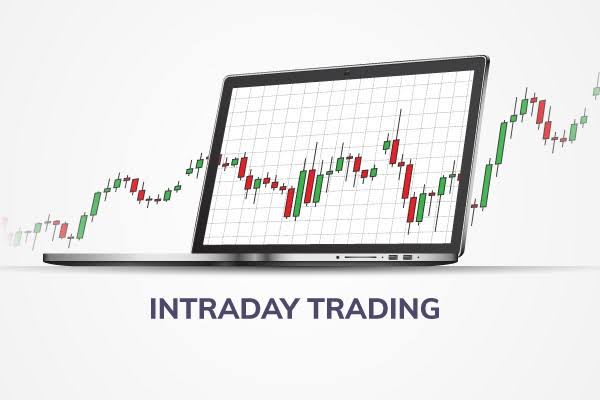
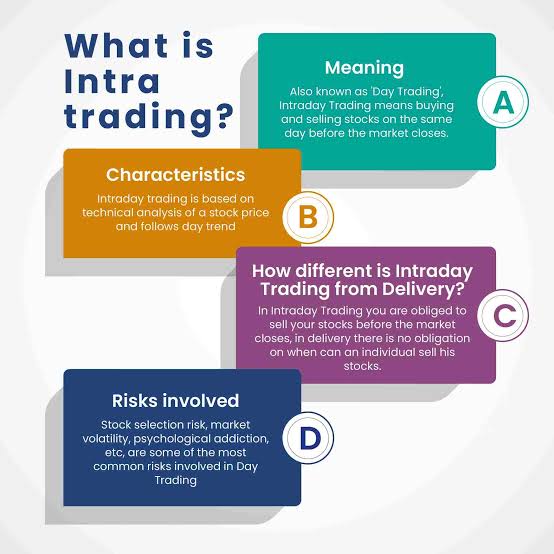
Intraday trading, also known as day trading, refers to the buying and selling of financial instruments (such as stocks, currencies, or commodities) within the same trading day. Intraday traders aim to take advantage of short-term price movements and fluctuations in the market. Unlike long-term investors who hold onto their investments for an extended period, intraday traders close out their positions before the end of the trading day.
Intraday Trading
• Key characteristics of intraday trading include :
1. Short Holding Periods : Intraday traders typically hold positions for a few minutes to hours, aiming to capitalize on short-term price movements.
2. High Frequency of Trades : Intraday traders execute multiple trades in a single day, reacting to price changes and market trends.
3. Leverage : Traders often use leverage to amplify their potential profits. However, leverage also increases the risk, as losses can be magnified.
4. Technical Analysis : Intraday traders heavily rely on technical analysis and chart patterns to make trading decisions. They use various technical indicators and chart patterns to predict short-term price movements.
5. Market Volatility : Intraday trading thrives on market volatility. Traders look for price fluctuations and trends to make quick and profitable trades.
6. Risk Management : Given the short-term nature of intraday trading, risk management is crucial. Traders set stop-loss orders to limit potential losses and have a clear exit strategy.
7. Margin Trading : Intraday traders often use margin accounts provided by brokers, allowing them to trade larger positions with a smaller amount of capital. This increases both potential gains and losses.
It’s important to note that while intraday trading can be profitable, it also involves a high level of risk. Prices can be volatile, and markets can change rapidly. Successful intraday trading requires a solid understanding of market trends, technical analysis, risk management, and discipline. Many traders also use specialized software and tools to assist in their decision-making process.
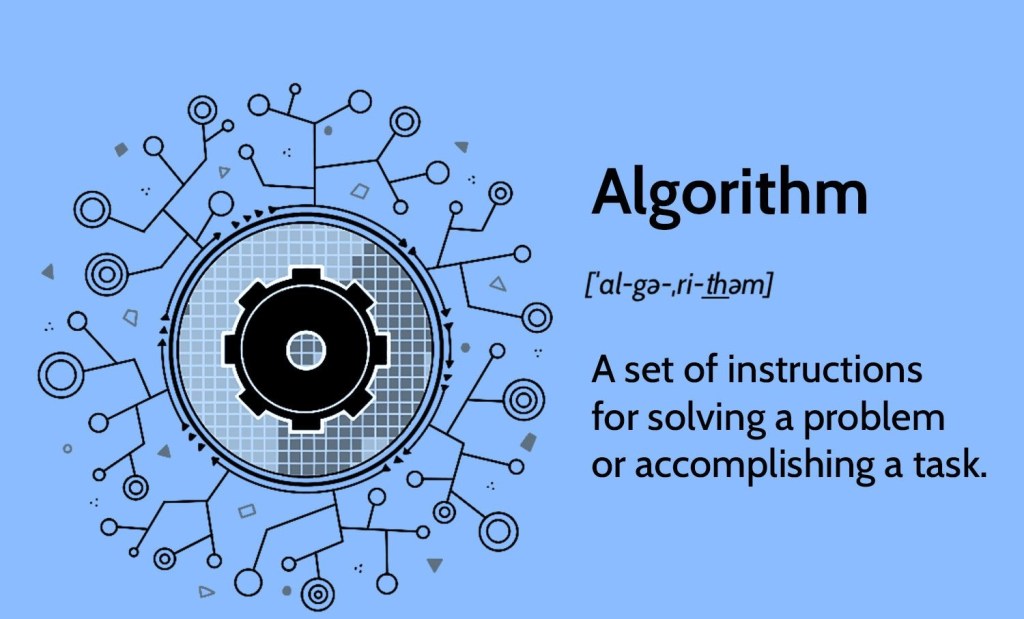
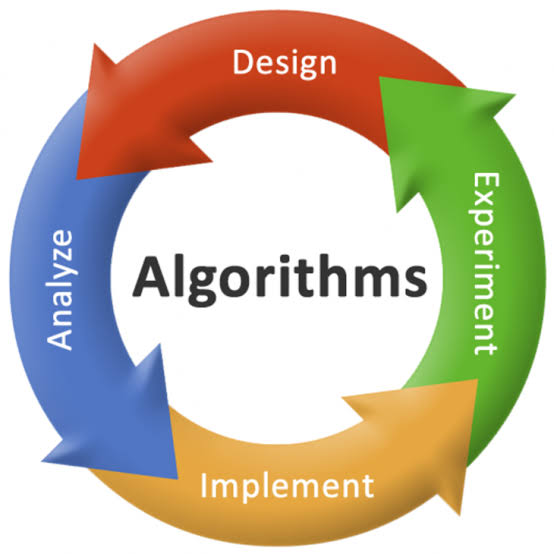
An algorithm is a step-by-step procedure or set of rules designed to perform a specific task or solve a particular problem. It is a fundamental concept in computer science and mathematics, serving as the foundation for various computational processes and decision-making mechanisms. The word “algorithm” is derived from the name of the Persian mathematician and scholar Muhammad ibn Musa al-Khwarizmi, who lived in the 9th century and made significant contributions to the fields of mathematics and astronomy.
At its core, an algorithm is a precise and unambiguous sequence of instructions that, when executed, accomplishes a particular task or produces a specific output. These instructions are typically expressed in a formalized language that can be understood by both humans and computers. Algorithms play a crucial role in various domains, including computer programming, data processing, cryptography, artificial intelligence, and more.
One key characteristic of algorithms is that they must be finite and terminate after a certain number of steps. This ensures that the algorithm eventually produces an output, making it practical and usable within the constraints of computational resources and time. Additionally, algorithms must be effective, meaning they solve the intended problem correctly, and efficient, meaning they do so with minimal use of resources such as time and memory.
Algorithms can be broadly categorized based on their purpose and functionality. Sorting algorithms, for example, are designed to arrange elements in a specific order, while searching algorithms aim to find a particular item within a collection of data. Other common types of algorithms include mathematical algorithms (performing mathematical operations), encryption algorithms (securing data), and optimization algorithms (finding the best solution among a set of possibilities).
The study of algorithms involves analyzing their correctness, efficiency, and complexity. Correctness refers to the algorithm’s ability to produce the desired output for all valid inputs, while efficiency relates to how well an algorithm utilizes computational resources. Complexity, on the other hand, measures the algorithm’s performance in terms of time and space requirements, providing insights into its scalability and practicality.
The design and analysis of algorithms are fundamental aspects of computer science education and research. Algorithmic thinking involves breaking down complex problems into smaller, more manageable subproblems and designing efficient solutions for each. This approach facilitates the creation of algorithms that can handle real-world challenges, from optimizing logistics and route planning to enhancing data processing and machine learning models.
In the rapidly evolving landscape of technology, algorithms are central to the development of innovative applications and systems. From search engines and recommendation algorithms to self-driving cars and financial modeling, algorithms underpin a wide range of modern technologies. As society continues to rely on computational solutions for an increasing number of tasks, the importance of understanding and advancing algorithmic principles becomes ever more crucial.
Type’s OF Algorithm ?
Algorithms come in various types, each designed to address specific computational tasks or problem-solving scenarios. Here are some common types of algorithms.
1. Sorting Algorithms :
• Bubble Sort : Repeatedly steps through the list, compares adjacent elements, and swaps them if they are in the wrong order.
• Quick Sort : Utilizes a divide-and-conquer strategy to partition the array and recursively sort subarrays.
• Merge Sort : Divides the array into two halves, recursively sorts each half, and then merges them.
2. Searching Algorithms :
• Binary Search : Efficiently locates a target value within a sorted array by repeatedly dividing the search space in half.
• Linear Search : Sequentially checks each element in a list until a match is found or the end of the list is reached.
3. Graph Algorithms :
• Depth-First Search (DFS) : Explores as far as possible along each branch before backtracking, often used for traversing graphs.
• Breadth-First Search (BFS) : Explores all the neighbor nodes at the present depth before moving on to nodes at the next depth level.
4. Dynamic Programming Algorithms :
• Fibonacci Sequence using Dynamic Programming : Optimizes the calculation of Fibonacci numbers by storing previously computed values to avoid redundant calculations.
• Longest Common Subsequence (LCS) : Finds the longest subsequence common to two sequences by breaking the problem into smaller overlapping subproblems.
5. Greedy Algorithm :
• Dijkstra’s Algorithm : Finds the shortest path between nodes in a graph by always choosing the path with the lowest total cost.
• Knapsack Problem using Greedy Approach : Solves the problem of selecting items with maximum total value without exceeding a given weight constraint.
These are just a few examples, and there are many other specialized algorithms designed for specific tasks and problem domains. The choice of algorithm depends on the nature of the problem, the available resources, and the desired outcome.
Theta decay, also known as time decay or simply “theta,” is a critical concept in option trading. It refers to the rate at which the value of an option erodes as time passes, assuming all other factors remain constant. Theta decay is a fundamental aspect of options pricing and plays a significant role in determining an option’s price, particularly in the context of time-sensitive strategies. In this comprehensive discussion, I will provide a detailed explanation of theta decay, its significance in option trading, how it is calculated, and how traders can use this concept to their advantage.
Table of contents.
1. Introduction to Option Trading. 2. Basics of Options. 3. Option Pricing Factors. 4. Understanding Theta Decay. 5. Significance of Theta Decay. 6. Factors Influencing Theta Decay. 7. Calculating Theta. 8. Time Decay Strategies. 9. Conclusion.
Introduction to Option Trading.
Option trading is a financial instrument that provides investors with the opportunity to profit from the movement of underlying assets without actually owning those assets. It is a versatile tool used by traders and investors for various purposes, including speculation, hedging, and income generation. Options come in two main forms: calls and puts.
• Call Option : These give the holder the right, but not the obligation, to buy an underlying asset at a predetermined price (strike price) before or on a specific expiration date.
• Put Option : These give the holder the right, but not the obligation, to sell an underlying asset at a predetermined price (strike price) before or on a specific expiration date.
Option trading strategies can be classified into two main categories :
• Directional Strategies : These strategies involve betting on the price movement of the underlying asset. They include buying call options if you expect the asset’s price to rise (bullish) and buying put options if you anticipate a price decline (bearish).
• Non-Directional Strategies : These strategies focus on other factors besides the asset’s price, such as volatility, time, or both. Non-directional strategies are often used to generate income or hedge existing positions.
Basics of Options.
To understand theta decay, it’s important to grasp some fundamental concepts related to options:
• Strike Price : The strike price is the price at which the option holder has the right to buy (for call options) or sell (for put options) the underlying asset.
• Premium : The premium is the price that an option buyer pays to acquire the option. It represents the cost of the option and is determined by several factors, including the underlying asset’s price, strike price, time to expiration, and implied volatility.
• Expiration Date : Options have a limited lifespan, with a specified expiration date. Options can be categorized as short-term (e.g., weekly options) or long-term (e.g., LEAPS, which can have expirations up to several years).
• Intrinsic Value and Time Value : An option’s premium can be divided into two components: intrinsic value and time value. Intrinsic value is the portion of the premium that represents the option’s immediate value if it were to be exercised. Time value is the portion of the premium that reflects the potential for the option to gain value over time.
Option Pricing Factors.
Options are priced using various factors, which are often represented by the Black-Scholes-Merton model or more advanced models like the Binomial model. The primary factors that influence option prices are:
• Underlying Asset Price : The current price of the underlying asset has a direct impact on the option premium. For call options, as the asset’s price increases, the option premium generally rises. Conversely, for put options, as the asset’s price decreases, the option premium generally increases.
• Strike Price : The relationship between the strike price and the underlying asset price determines whether an option is in-the-money (ITM), at-the-money (ATM), or out-of-the-money (OTM). Options with strike prices closer to the current asset price typically have higher premiums.
• Time to Expiration : The time until the option’s expiration date plays a crucial role in option pricing. The more time an option has until expiration, the higher its time value. As the expiration date approaches, the time value decreases.
• Implied Volatility : Implied volatility reflects the market’s expectations of future price fluctuations of the underlying asset. Higher implied volatility results in higher option premiums, as it increases the likelihood of the option moving into a profitable position.
• Interest Rates : Interest rates have a minor impact on option pricing. Higher interest rates can slightly increase call option premiums and decrease put option premiums because the cost of holding the option’s cash collateral is higher.
Understanding Theta Decay.
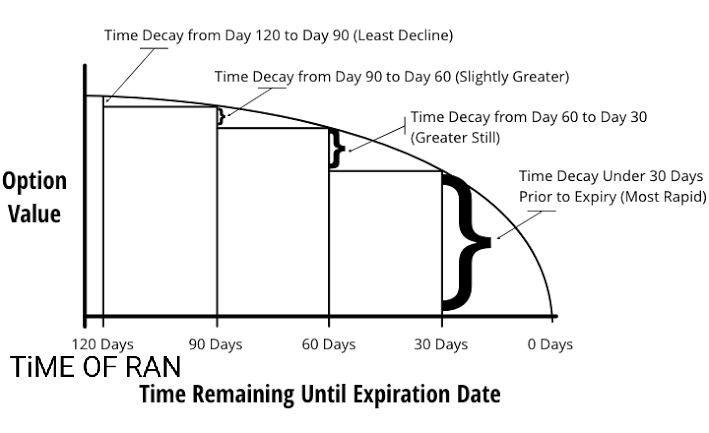
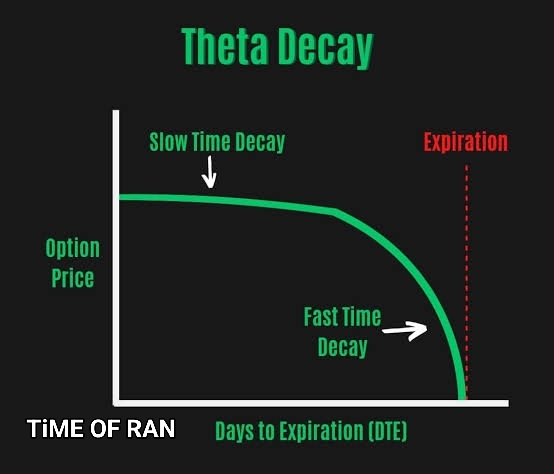
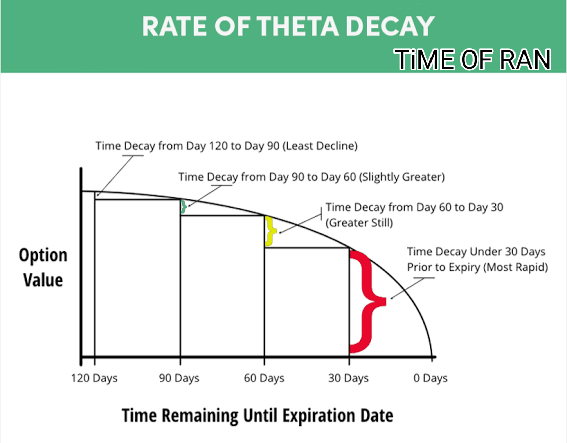
Rate Of Theta Decay.
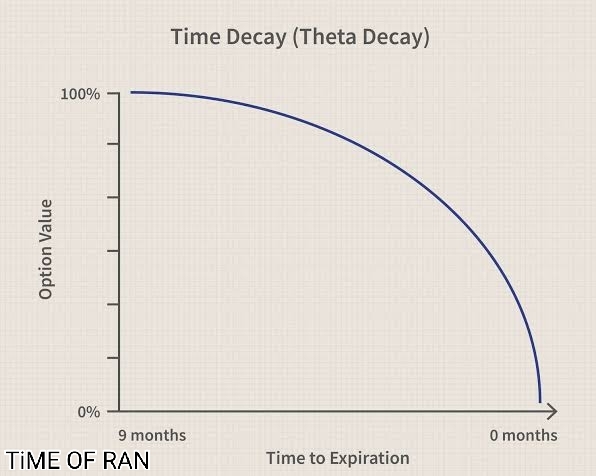
Theta decay, often referred to as just “theta,” is one of the essential factors affecting an option’s premium. It represents the rate at which the option’s time value diminishes as time passes, assuming all other factors (stock price, implied volatility, and interest rates) remain constant. In simple terms, it is the daily erosion of an option’s value due to the passage of time.
Theta decay is a crucial concept for option traders to understand because it can significantly impact the profitability of options positions. Here’s how it works:
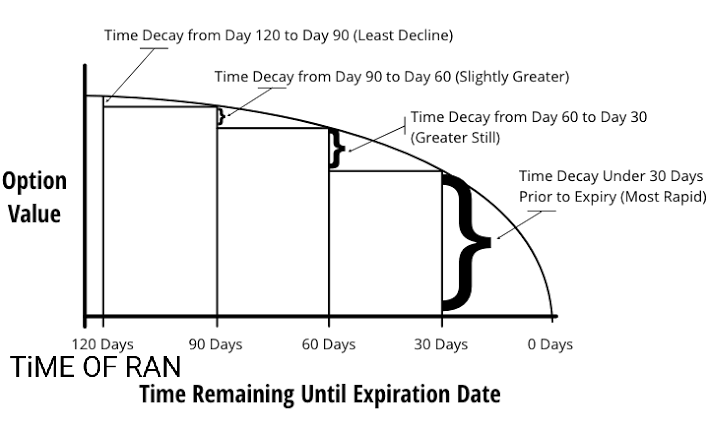
• Time Value Erosion : Options have both intrinsic value (if they are in-the-money) and time value. Theta specifically measures the time value component. As an option’s expiration date approaches, the time value decreases. This erosion in time value accelerates the closer the option gets to expiration.
• Linear Decay : Theta decay is linear in nature. This means that, all else being equal, the daily reduction in an option’s time value is relatively constant, which is essential for option pricing models to work effectively
• Different for Calls and Puts : Theta decay behaves differently for call options and put options. Generally, call options have positive theta, while put options have negative theta. This is because call options benefit from the passage of time, while put options are adversely affected.
• Non-Linear Effects : While theta decay is generally linear, it can exhibit non-linear behavior as the option approaches expiration. The rate of time decay accelerates significantly in the final weeks, days, and hours leading up to expiration.
Significance of Theta Decay.
Theta decay is significant for several reasons in option trading.
• Risk Management : Understanding theta helps traders manage risk. It highlights the cost of holding options positions, particularly when employing strategies like covered calls or cash-secured puts.
• Profit Potential : Theta can also be used strategically to enhance profit potential. For instance, if a trader believes that an option’s time decay will accelerate as it approaches expiration, they may choose to sell options to capitalize on this decay.
• Time-Sensitive Strategies : Many options trading strategies, such as iron condors, calendars, and diagonals, are highly dependent on theta. Traders use these strategies to take advantage of time decay by either being net sellers of options or structuring positions to benefit from the passage of time.
• Income Generation : Theta is a key component of income-generating strategies, such as covered calls and credit spreads. These strategies involve selling options with high time decay to collect premiums and generate consistent income.
• Time Horizon : Theta can influence the choice of expiration dates. Traders with short-term outlooks may prefer options with lower time values, while long-term investors may look to minimize theta by choosing options with more extended expiration dates.
Software is a collection of instructions and data that enable computers and other electronic devices to perform specific tasks or functions. It is a crucial component of modern technology, powering everything from operating systems and applications to embedded systems and cloud services…
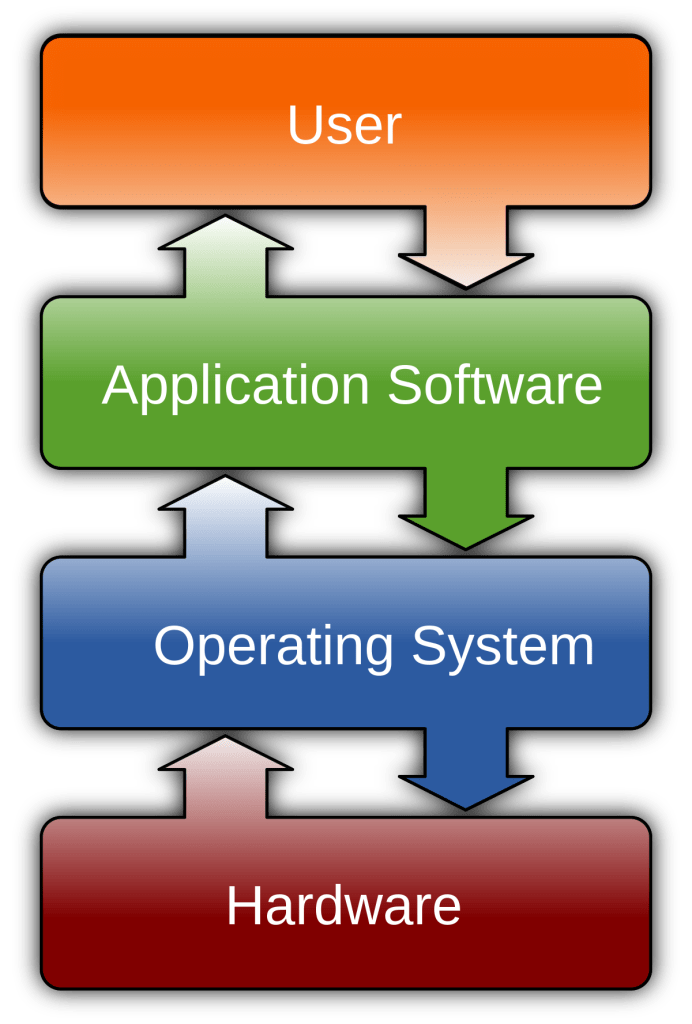
Software can be broadly categorized into two main types: system software and application software. System software includes operating systems, device drivers, and firmware, which manage hardware and provide a platform for other software to run. Application software, on the other hand, serves end-users by providing tools and functionality for tasks such as word processing, gaming, or web browsing…
Software is typically created through programming or coding, where developers write lines of code using programming languages. These instructions are then compiled or interpreted by a computer’s processor, translating the human-readable code into machine code that the hardware can execute…
The software industry is dynamic and constantly evolving, with new updates, versions, and applications being developed to meet the changing needs of users. Whether it’s the software on your smartphone, the web browsers you use, or the operating system that powers your computer, software is the invisible force that drives and shapes the digital world we live in today…
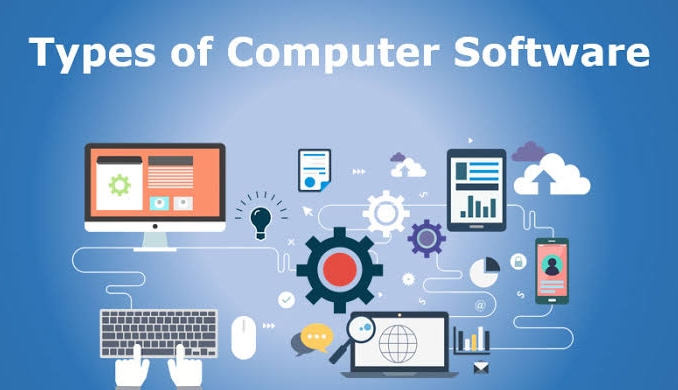
Computer software can be classified into various types based on its functionality, purpose, and usage. Here, we’ll explore some of the primary categories of computer software.
1. System Software :-
Operating Systems (OS) : These are the core software that manage hardware resources, provide a user interface, and enable the execution of other software. Popular examples include Microsoft Windows, macOS, and Linux.
• Device Drivers : Device drivers facilitate communication between the hardware devices and the operating system. They allow peripherals like printers, graphics cards, and network adapters to work with the computer.
• Firmware : Firmware is software that is embedded in hardware devices, such as BIOS (Basic Input/Output System) on a motherboard or firmware on your smartphone. It controls the basic functions and initializes hardware during the boot process.
2. Application Software :-
• Word Processing Software : These applications, like Microsoft Word or Google Docs, enable users to create, edit, and format text documents.
• Spreadsheet Software : Programs like Microsoft Excel or Google Sheets help users manage data, perform calculations, and create charts and graphs.
• Presentation Software : Tools like Microsoft PowerPoint and Google Slides allow users to create multimedia presentations.
• Database Software : Database management systems, such as MySQL and Microsoft Access, store, organize, and retrieve data efficiently.
• Web Browsers : Applications like Google Chrome, Mozilla Firefox, and Safari are used to access and navigate the internet.
• Multimedia Software. : This category includes audio and video editing software (e.g., Adobe Premiere Pro and Audacity), media players (e.g., VLC), and graphic design tools (e.g., Adobe Photoshop).
• Gaming Software : Video games and gaming platforms, such as Steam, PlayStation, and Xbox, are a significant part of the software industry.
• Productivity Software : Tools like project management software (e.g., Trello), note-taking apps (e.g., Evernote), and communication software (e.g., Slack) improve productivity.
• Graphics Software : Graphic design and illustration software, such as Adobe Illustrator and CorelDRAW, are used for creating visual content.
• Educational Software : Educational programs and e-learning platforms like Moodle and Khan Academy aid in teaching and learning.
• Financial Software : Applications like QuickBooks and Quicken help with accounting, budgeting, and financial management.
• Antivirus and Security Software : These programs protect computers from malware, viruses, and other online threats. Examples include Norton, McAfee, and Windows Defender.
• Utility Software : Utility software includes tools like file compression software (e.g., WinZip), disk cleanup, and system optimization programs.
• Communication Software : Email clients (e.g., Microsoft Outlook), instant messaging apps (e.g., WhatsApp), and video conferencing tools (e.g., Zoom) fall into this category.
3.Middleware Software :-
• Middleware : Middleware software acts as an intermediary between different applications, enabling them to communicate and share data. It’s often used in enterprise-level systems to facilitate integration between software components.
4. Programming Software :-
• Integrated Development Environments (IDEs) : IDEs like Visual Studio, Eclipse, and PyCharm provide tools for developers to write, test, and debug code efficiently.
• Text Editors : Text editors like Notepad++, Sublime Text, and Vim are simpler tools for writing and editing code.
• Compilers and Interpreters : These software types translate high-level programming languages into machine code or execute code directly. Examples include GCC (C/C++ compiler) and Python’s interpreter.
5. Embedded Software :-
• Embedded Systems : Software embedded in hardware devices like microwave ovens, cars, or home automation systems to control specific functions.
6. Open Source Software :-
• Open Source : These are software applications with source code that is open to the public for viewing, modification, and distribution. Linux, Apache, and LibreOffice are well-known open-source software.
7. Proprietary Software :-
• Proprietary : Proprietary software is owned by a specific organization or company. It includes commercial software like Microsoft Office and Adobe Creative Suite.
8.Freeware, Shareware, and Trial Software :-
• Freeware : Software that is free to use with no payment required.
• Shareware : Software that is free to use for a trial period but requires payment for continued use.
• Trial Software : Fully-featured software that is free for a limited time or with limited functionality. Users can purchase the full version for extended features.
9. Cloud-Based Software :-
• SaaS (Software as a Service) : Cloud-based software accessible over the internet, such as Google Workspace and Salesforce, which provides various applications on a subscription basis.
10. Mobile Apps :-
• Mobile Operating Systems : iOS and Android power mobile devices, while mobile apps, available through app stores, cover a wide range of categories, from social media to gaming.
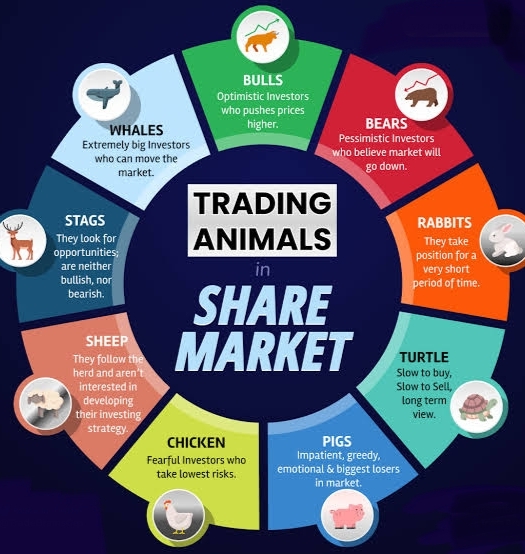
• The stock market is a financial market where individuals and institutions can buy and sell shares of publicly-traded companies. It is also known as the equity market or the stock exchange. The stock market provides a platform for companies to raise capital by issuing stocks (equity securities), and it allows investors to buy a stake in these companies.
Here are some key concepts related to the stock market :-
* Stocks ( Share ) : Stocks represent ownership in a company. When you buy a stock, you become a shareholder and have a claim on the company’s assets and earnings. Shareholders often have the right to vote on certain company decisions and may receive dividends if the company distributes profits.
* Stock Exchanges : Stock exchanges are the physical or electronic platforms where stocks are bought and sold. Some of the most well-known stock exchanges include the New York Stock Exchange (NYSE) and the Nasdaq in the United States, the London Stock Exchange (LSE) in the United Kingdom, and the Tokyo Stock Exchange (TSE) in Japan.
* Stock Indexes : Stock indexes, such as the S&P 500, Dow Jones Industrial Average, and NASDAQ Composite, track the performance of a specific group of stocks. They are used as benchmarks to assess the overall health of the stock market and to make investment decisions.
* Stock Market Participants : The stock market involves a variety of participants, including individual investors, institutional investors (such as mutual funds and pension funds), traders, and market makers. Market makers help facilitate trading by buying and selling stocks to maintain liquidity.
* Stock Market Orders : When investors want to buy or sell stocks, they place orders in the market. Common order types include market orders (executed at the current market price) and limit orders (executed at a specified price or better).
* Volatility : Stock prices can be highly volatile, meaning they can experience significant price fluctuations over short periods. Various factors, including economic conditions, corporate earnings, and market sentiment, can influence stock prices.
* Investing and Trading : Some participants in the stock market are long-term investors who buy stocks with the intention of holding them for an extended period to benefit from capital appreciation and dividends. Others are traders who aim to profit from short-term price movements and may buy and sell stocks more frequently.
* Regulation : Stock markets are regulated by government agencies to ensure fair and transparent trading. Regulations aim to protect investors and maintain the integrity of the market.
The stock market plays a crucial role in the global economy, as it provides companies with a means to raise capital for expansion and investment, while also offering individuals and institutions the opportunity to invest and potentially grow their wealth. However, investing in the stock market carries risks, and it is important for individuals to do their research, diversify their investments, and consider their financial goals and risk tolerance when participating in the market.
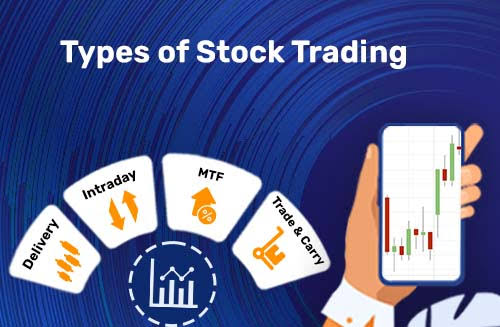
Type’s OF Stock Trading
There are several types of stock trading strategies and approaches that investors and traders use in the stock market. These approaches can vary in terms of time horizon, risk tolerance, and the goals of the traders. Here are some common types of stock trading :-
* Day Trading :- Day traders buy and sell stocks within the same trading day, attempting to profit from short-term price movements. They usually make many trades in a single day and often use technical analysis and charts to identify entry and exit points.
* Swing Trading : Swing traders aim to capture short- to medium-term price swings in stocks. They may hold positions for several days or weeks, seeking to profit from trends and patterns in stock prices.
* Position Trading : Position traders have a longer time horizon and may hold positions for weeks, months, or even years. They base their decisions on fundamental analysis, looking at a company’s financial health and prospects for long-term growth.
* Value Investing : Value investors focus on finding undervalued stocks that are trading at a discount to their intrinsic value. They typically have a long-term perspective and are interested in the company’s fundamentals, including earnings, dividends, and balance sheets.
* Growth Investing : Growth investors look for stocks of companies with high growth potential. They are willing to pay a premium for stocks expected to experience rapid earnings growth. This approach often involves investing in technology and innovative companies.
* Dividend Investing : Dividend investors seek stocks of companies that pay regular dividends. They aim to generate income from these dividends and may hold the stocks for the long term. This approach is popular among income-oriented investors, such as retirees.
* Technical Analysis : Traders who use technical analysis analyze historical price charts and patterns to make trading decisions. They look for trends, support and resistance levels, and various technical indicators to predict future price movements.
* Fundamental Analysis : Fundamental analysts focus on a company’s financial statements, management quality, industry trends, and economic factors to assess the intrinsic value of a stock. They base their investment decisions on a stock’s underlying fundamentals.
* Options Trading : Options trading involves buying and selling options contracts, which give traders the right (but not the obligation) to buy or sell a stock at a specified price (strike price) within a certain time frame. Options can be used for various strategies, including hedging and leverage.
* Penny Stock Trading : Penny stocks are low-priced stocks typically trading at less than $5 per share. Some traders specialize in trading these stocks, but they can be highly speculative and carry significant risks.
* Algorithmic Trading : Algorithmic traders use computer algorithms to execute trading strategies automatically. These algorithms can analyze vast amounts of data and execute trades at high speeds, often in fractions of a second.
* Social Trading : Social trading platforms allow traders to follow and copy the trades of experienced investors. This approach is often used by beginners or those looking to leverage the expertise of others.
The choice of trading style or strategy depends on individual preferences, risk tolerance, and investment goals. It’s important for traders to thoroughly understand their chosen approach, perform due diligence, and manage risk appropriately. Additionally, stock trading involves inherent risks, and individuals should consider their financial situation and level of experience before engaging in any type of trading.
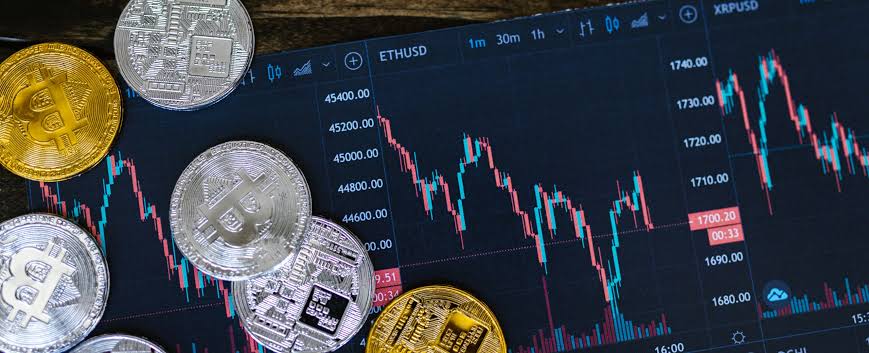
Cryptocurrency, a digital or virtual form of currency that uses cryptography for security, has garnered significant attention and popularity in recent years. It represents a paradigm shift in the world of finance and has the potential to revolutionize traditional financial systems. In this comprehensive guide, we will delve into the world of cryptocurrency, exploring its history, technology, use cases, challenges, and future prospects.
# History of Cryptocurrency ?
• Precursors to Cryptocurrency • The Birth of Bitcoin • The Rise of Altcoins • Evolving Landscape
Cryptocurrency has a fascinating history that traces its roots back to the late 20th century. It has undergone significant developments and transformations over the years.
• Precursors to Cryptocurrency : Before Bitcoin, there were attempts to create digital currencies, such as DigiCash and e-gold, which paved the way for the concept of digital money.
• The Birth of Bitcoin : In 2008, an anonymous person or group using the pseudonym Satoshi Nakamoto published the Bitcoin whitepaper, introducing the world to a decentralized digital currency. Bitcoin (BTC) was officially launched in January 2009.
• The Rise of Altcoins : Bitcoin’s success led to the creation of numerous alternative cryptocurrencies, often referred to as “altcoins.” These include Ethereum, Ripple, Litecoin, and many others, each with its unique features and use cases.
• Evolving Landscape : The cryptocurrency landscape has evolved significantly, with the emergence of thousands of cryptocurrencies and various blockchain platforms. It has also attracted the attention of governments, regulators, and institutional investors.
How Cryptocurrency Works ?
To understand how cryptocurrency operates, it’s essential to grasp the underlying technology and principles that power it.
* Blockchain Technology : Cryptocurrencies rely on blockchain technology, a distributed ledger that records all transactions across a network of computers. This technology ensures transparency, immutability, and security.
* Decentralization : Unlike traditional currencies, cryptocurrencies operate in a decentralized manner. They are not controlled by a single central authority, such as a government or a central bank, but rather by a network of participants.
* Cryptography : Cryptocurrencies use cryptographic techniques for securing transactions and controlling the creation of new units. This cryptographic security makes it extremely difficult to counterfeit or double-spend cryptocurrency.
* Mining and Consensus Mechanisms : Cryptocurrencies like Bitcoin use a process called mining to validate and add transactions to the blockchain. This process relies on consensus mechanisms like Proof of Work (PoW) and Proof of Stake (PoS) to maintain the integrity of the network.
Popular Crypto Currency ?
Popular Crypto Currency ?
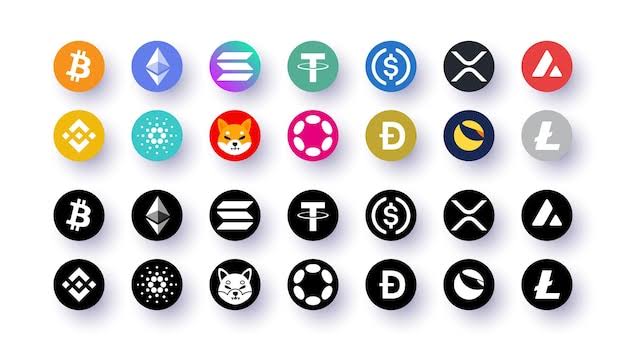
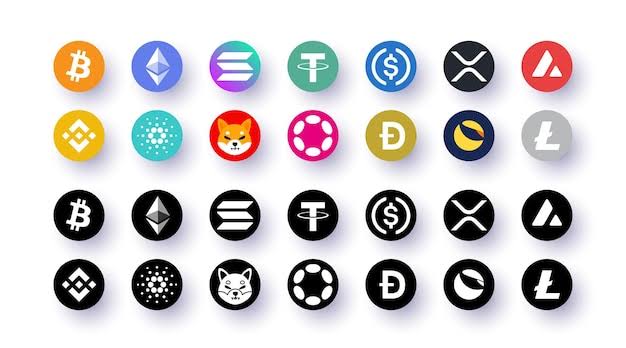
While there are thousands of cryptocurrencies in existence, a few have garnered significant attention and adoption. Here are some of the most well-known cryptocurrencies :
* Bitcoin (BTC) : As the first cryptocurrency, Bitcoin remains the most widely recognized and valuable. It serves primarily as a digital store of value and a medium of exchange.
* Ethereum (ETH) : Ethereum introduced the concept of smart contracts, enabling developers to build decentralized applications (DApps). It has played a crucial role in the growth of the decentralized finance (DeFi) and non-fungible token (NFT) markets.
* Ripple (XRP) : Ripple is designed for facilitating cross-border payments and settlements. It aims to provide faster and cheaper international transactions for financial institutions.
* Litecoin (LTC) : Often referred to as the “silver” to Bitcoin’s “gold,” Litecoin offers faster transaction confirmation times and is used for everyday transactions.
###Others : There are numerous other cryptocurrencies, each with its unique features and use cases. These include Cardano (ADA), Polkadot (DOT), Solana (SOL), and many more.
Wallets and Exchanges ?
To engage with cryptocurrencies, users need digital wallets to store and manage their assets. They also require cryptocurrency exchanges to buy, sell, and trade digital currencies.
# Types of Wallets : Cryptocurrency wallets come in various forms, including hardware wallets, software wallets, and mobile wallets. Each offers a different level of security and convenience.
# Cryptocurrency Exchanges : These platforms facilitate the buying, selling, and trading of cryptocurrencies. They can be centralized (CEX) or decentralized (DEX). It’s crucial to choose a reputable exchange and consider factors like fees, security, and available assets.
# Security Considerations : Protecting your cryptocurrency holdings is of paramount importance. This involves practices such as using hardware wallets, enabling two-factor authentication, and being cautious about phishing attempts.
Use Cases and Applications ?
Cryptocurrency has a range of applications beyond serving as a digital form of money.
# Digital Payments : Cryptocurrencies can be used for online and in-person purchases. They offer benefits like fast transactions, low fees, and financial privacy.
# Smart Contracts : Ethereum popularized the concept of smart contracts, self-executing agreements with the terms of the contract directly written into code. They have applications in areas like supply chain management, legal processes, and more.
# Tokenization of Assets : Cryptocurrencies enable the representation of real-world assets, such as real estate, art, and stocks, as digital tokens. This can make it easier to trade and transfer ownership.
# DeFi (Decentralized Finance) : DeFi platforms leverage blockchain technology to provide traditional financial services like lending, borrowing, and trading without the need for traditional intermediaries like banks.
• Understanding the Basics : Before investing in cryptocurrency, it’s crucial to have a solid grasp of the fundamentals. Start by learning about the technology behind cryptocurrencies, such as blockchain, and familiarize yourself with the major cryptocurrencies like Bitcoin and Ethereum.
• Diversification : Diversification is a fundamental investment principle. Avoid putting all
Blockchain technology is a revolutionary concept that has gained significant attention in recent years. It is often associated with cryptocurrencies like Bitcoin, but its applications go far beyond digital currencies. In this comprehensive explanation, we will explore what blockchain technology is, how it works, its history, its various use cases, and its potential impact on industries and society as a whole. This extensive guide will cover blockchain in approximately three thousand words.
### What is Blockchain ?
Definition
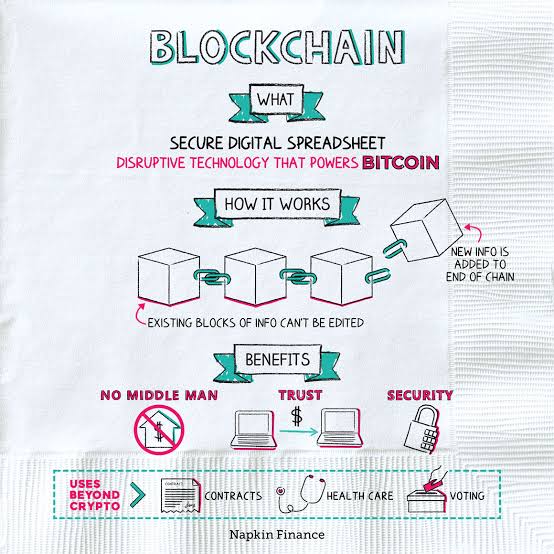
Blockchain is a decentralized and distributed ledger technology that records transactions across multiple computers. It is often referred to as a “chain of blocks” because it consists of a chain of data blocks linked together to form a secure and immutable record.
### Core Concepts ?
To understand blockchain, it’s essential to grasp some fundamental concepts:
* Decentralization : Unlike traditional centralized systems (e.g., banks), blockchain operates on a decentralized network of computers. No single entity has complete control, making it more resilient and transparent.
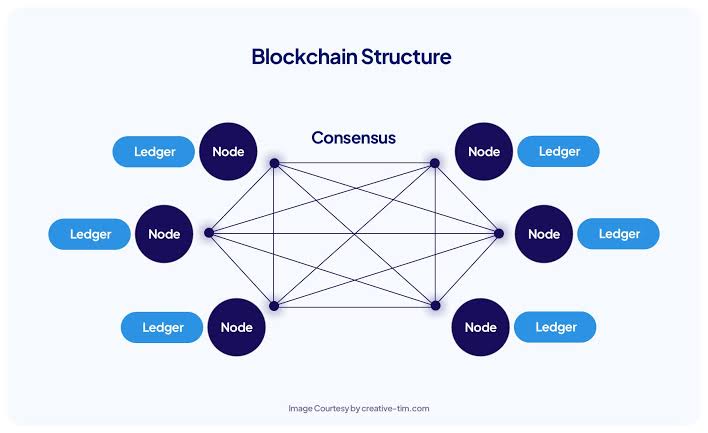
* Distributed Ledger : A blockchain ledger is not stored on a single computer or server but distributed across a network of nodes. Each node has a copy of the entire ledger, ensuring transparency and redundancy.
* Immutability : Once data is recorded in a blockchain, it is nearly impossible to alter or delete. This immutability is achieved through cryptographic techniques.
* Consensus Mechanisms. : Blockchains use consensus mechanisms to validate and add transactions to the ledger. The most common mechanism is Proof of Work (PoW), but there are others like Proof of Stake (PoS) and Delegated Proof of Stake (DPoS).
How Does Blockchain Work ?
How Does Block Chain Technology work ?
The basic structure of a blockchain can be broken down into the following components :
* Transactions : Users initiate transactions, which involve the exchange of assets, data, or any value. These transactions are bundled into blocks.
* Blocks : A block is a collection of transactions. Each block contains a reference to the previous block, creating a chain.
* Miners/Validators : Miners (in PoW) or validators (in PoS) compete to solve complex mathematical puzzles to validate transactions. The first to solve it gets the right to add a new block to the chain.
* Consensus : Once a miner/validator adds a block, the network reaches a consensus on the validity of the transactions. This ensures that only legitimate transactions are recorded.
* Security : Cryptography plays a pivotal role in securing the blockchain. Transactions are cryptographically signed, and the integrity of the entire chain is maintained through hashing algorithms.
A Brief History of Blockchain ?
HISTORY OF BLOCK CHAIN ?
* Pre-Bitcoin Era
The concept of a decentralized ledger predates Bitcoin. In the early 1990s, cryptographers like Stuart Haber and W. Scott Stornetta developed a system for timestamping documents to prevent backdating or tampering. However, their work did not gain widespread adoption.
* The Birth of Bitcoin
The true birth of blockchain technology is often attributed to the mysterious figure known as Satoshi Nakamoto. In 2008, Nakamoto published a whitepaper titled “Bitcoin: A Peer-to-Peer Electronic Cash System.” This paper outlined the first practical application of blockchain as the underlying technology for a digital currency.
* The Rise of Bitcoin
In January 2009, Nakamoto mined the first Bitcoin block, known as the “genesis block.” This marked the beginning of the Bitcoin blockchain. Bitcoin rapidly gained popularity as a digital currency and a store of value, leading to a surge in its price and widespread recognition.
* Emergence of Altcoins
Bitcoin’s success paved the way for the creation of alternative cryptocurrencies or “altcoins.” These projects introduced variations in blockchain technology, such as faster transaction processing, enhanced privacy features, and different consensus mechanisms.
* Beyond Cryptocurrencies
While blockchain was initially associated with cryptocurrencies, developers soon recognized its potential for various applications beyond digital money. This led to the exploration of blockchain’s utility in fields like finance, supply chain management, healthcare, and more.
Key Features of Blockchain ?
Key features of Block Chain ?
Transparency and Trust
One of the most significant advantages of blockchain is its transparency. All participants in the network have access to the same ledger, reducing the need for trust in intermediaries. This transparency enhances accountability and reduces fraud.
* * * Security and Immutability
Blockchain’s security is achieved through cryptographic techniques, making it extremely resistant to tampering or fraud. Once a transaction is added to the blockchain, it is virtually impossible to alter, ensuring the integrity of the data.
* * * Decentralization
The decentralized nature of blockchain eliminates the need for a central authority or intermediary. This reduces the risk of a single point of failure and enhances network resilience.
* * * Efficiency and Reduced Costs
Blockchain can streamline processes by removing intermediaries and automating tasks. This leads to cost savings and faster transaction settlement times.
* * * Interoperability
Many blockchain projects are working on solutions for better interoperability, enabling different blockchains to communicate and share data seamlessly. This will be crucial for the development of a blockchain-based ecosystem.
Use Cases of Blockchain ?
Block ⛓️Chain.Use’s OF Block Chain Technology :-
# Cryptocurrencies
Cryptocurrencies are the most well-known application of blockchain technology. Bitcoin, Ethereum, and thousands of other cryptocurrencies use blockchain to enable secure, peer-to-peer digital transactions.
# Smart Contracts
Smart contracts are self-executing contracts with the terms of the agreement written directly into code. They automate contract execution and eliminate the need for intermediaries. Ethereum is a popular blockchain for creating and executing smart contracts.
# Supply Chain Management
Blockchain can enhance transparency and traceability in supply chains. It allows consumers and businesses to track the journey of products, ensuring authenticity and quality.
# Healthcare
Blockchain can securely store and share medical records, ensuring patient data privacy and enabling faster and more accurate diagnoses and treatments.
# Voting Systems
Blockchain has the potential to revolutionize voting systems by providing secure and transparent voting processes, reducing the risk of fraud and manipulation.
# Finance
Blockchain technology is transforming the financial industry. It enables faster, more cost-effective cross-border payments, reduces fraud, and opens up new opportunities in lending, insurance, and asset tokenization.
# Intellectual Property
Blockchain can be used to prove ownership of intellectual property, such as patents, copyrights, and trademarks, making it easier to protect and license creative works.
# Identity Verification
Blockchain offers a secure and decentralized solution for identity verification, reducing the risk of identity theft and simplifying the process of proving one’s identity.
# Real Estate
The real estate industry can benefit from blockchain’s ability to streamline property transactions, reduce fraud, and improve transparency in property records.
# Energy Trading
Blockchain allows for peer-to-peer energy trading, enabling consumers to buy and sell excess energy directly to one another, reducing dependence on centralized energy providers.
Challenges and Limitations of Blockchain ?
# Scalability
As the number of transactions on a blockchain grows, scalability becomes a significant challenge. Some blockchains struggle to process transactions quickly and cost-effectively.
# Energy Consumption
Proof of Work blockchains, like Bitcoin, require significant computational power, leading to high energy consumption. This has raised concerns about the environmental impact of




















 TiME OF RAN