What is Algorithm ?
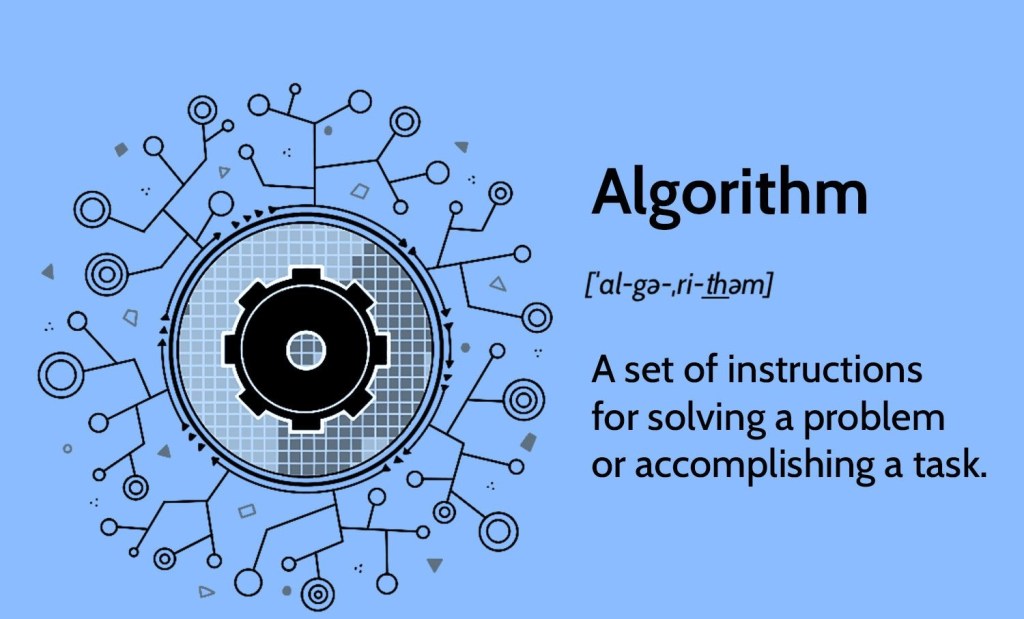
An algorithm is a step-by-step procedure or set of rules designed to perform a specific task or solve a particular problem. It is a fundamental concept in computer science and mathematics, serving as the foundation for various computational processes and decision-making mechanisms. The word “algorithm” is derived from the name of the Persian mathematician and scholar Muhammad ibn Musa al-Khwarizmi, who lived in the 9th century and made significant contributions to the fields of mathematics and astronomy.
At its core, an algorithm is a precise and unambiguous sequence of instructions that, when executed, accomplishes a particular task or produces a specific output. These instructions are typically expressed in a formalized language that can be understood by both humans and computers. Algorithms play a crucial role in various domains, including computer programming, data processing, cryptography, artificial intelligence, and more.
One key characteristic of algorithms is that they must be finite and terminate after a certain number of steps. This ensures that the algorithm eventually produces an output, making it practical and usable within the constraints of computational resources and time. Additionally, algorithms must be effective, meaning they solve the intended problem correctly, and efficient, meaning they do so with minimal use of resources such as time and memory.
Algorithms can be broadly categorized based on their purpose and functionality. Sorting algorithms, for example, are designed to arrange elements in a specific order, while searching algorithms aim to find a particular item within a collection of data. Other common types of algorithms include mathematical algorithms (performing mathematical operations), encryption algorithms (securing data), and optimization algorithms (finding the best solution among a set of possibilities).
The study of algorithms involves analyzing their correctness, efficiency, and complexity. Correctness refers to the algorithm’s ability to produce the desired output for all valid inputs, while efficiency relates to how well an algorithm utilizes computational resources. Complexity, on the other hand, measures the algorithm’s performance in terms of time and space requirements, providing insights into its scalability and practicality.
The design and analysis of algorithms are fundamental aspects of computer science education and research. Algorithmic thinking involves breaking down complex problems into smaller, more manageable subproblems and designing efficient solutions for each. This approach facilitates the creation of algorithms that can handle real-world challenges, from optimizing logistics and route planning to enhancing data processing and machine learning models.
In the rapidly evolving landscape of technology, algorithms are central to the development of innovative applications and systems. From search engines and recommendation algorithms to self-driving cars and financial modeling, algorithms underpin a wide range of modern technologies. As society continues to rely on computational solutions for an increasing number of tasks, the importance of understanding and advancing algorithmic principles becomes ever more crucial.
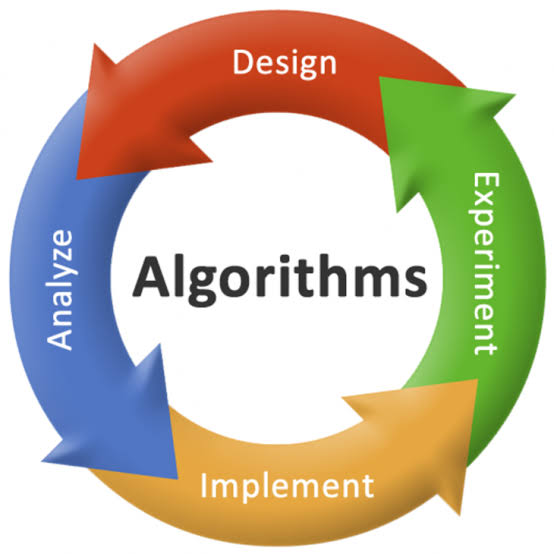
Type’s OF Algorithm ?
Algorithms come in various types, each designed to address specific computational tasks or problem-solving scenarios. Here are some common types of algorithms.
1. Sorting Algorithms :
• Bubble Sort : Repeatedly steps through the list, compares adjacent elements, and swaps them if they are in the wrong order.
• Quick Sort : Utilizes a divide-and-conquer strategy to partition the array and recursively sort subarrays.
• Merge Sort : Divides the array into two halves, recursively sorts each half, and then merges them.
2. Searching Algorithms :
• Binary Search : Efficiently locates a target value within a sorted array by repeatedly dividing the search space in half.
• Linear Search : Sequentially checks each element in a list until a match is found or the end of the list is reached.
3. Graph Algorithms :
• Depth-First Search (DFS) : Explores as far as possible along each branch before backtracking, often used for traversing graphs.
• Breadth-First Search (BFS) : Explores all the neighbor nodes at the present depth before moving on to nodes at the next depth level.
4. Dynamic Programming Algorithms :
• Fibonacci Sequence using Dynamic Programming : Optimizes the calculation of Fibonacci numbers by storing previously computed values to avoid redundant calculations.
• Longest Common Subsequence (LCS) : Finds the longest subsequence common to two sequences by breaking the problem into smaller overlapping subproblems.
5. Greedy Algorithm :
• Dijkstra’s Algorithm : Finds the shortest path between nodes in a graph by always choosing the path with the lowest total cost.
• Knapsack Problem using Greedy Approach : Solves the problem of selecting items with maximum total value without exceeding a given weight constraint.
These are just a few examples, and there are many other specialized algorithms designed for specific tasks and problem domains. The choice of algorithm depends on the nature of the problem, the available resources, and the desired outcome.
 TiME OF RAN