
• The stock market is a financial market where individuals and institutions can buy and sell shares of publicly-traded companies. It is also known as the equity market or the stock exchange. The stock market provides a platform for companies to raise capital by issuing stocks (equity securities), and it allows investors to buy a stake in these companies.
Here are some key concepts related to the stock market :-
* Stocks ( Share ) : Stocks represent ownership in a company. When you buy a stock, you become a shareholder and have a claim on the company’s assets and earnings. Shareholders often have the right to vote on certain company decisions and may receive dividends if the company distributes profits.
* Stock Exchanges : Stock exchanges are the physical or electronic platforms where stocks are bought and sold. Some of the most well-known stock exchanges include the New York Stock Exchange (NYSE) and the Nasdaq in the United States, the London Stock Exchange (LSE) in the United Kingdom, and the Tokyo Stock Exchange (TSE) in Japan.
* Stock Indexes : Stock indexes, such as the S&P 500, Dow Jones Industrial Average, and NASDAQ Composite, track the performance of a specific group of stocks. They are used as benchmarks to assess the overall health of the stock market and to make investment decisions.

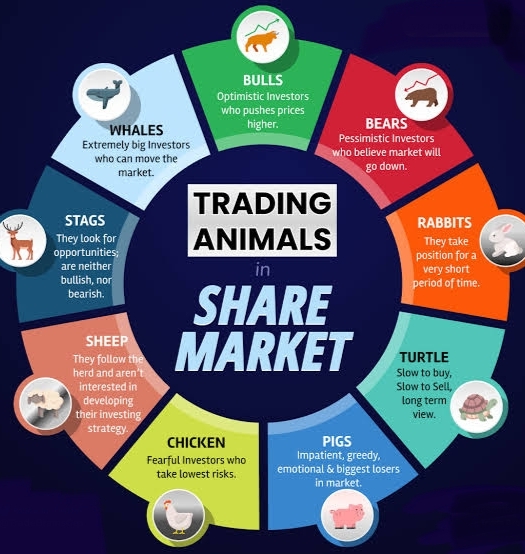
* Stock Market Participants : The stock market involves a variety of participants, including individual investors, institutional investors (such as mutual funds and pension funds), traders, and market makers. Market makers help facilitate trading by buying and selling stocks to maintain liquidity.
* Stock Market Orders : When investors want to buy or sell stocks, they place orders in the market. Common order types include market orders (executed at the current market price) and limit orders (executed at a specified price or better).
* Volatility : Stock prices can be highly volatile, meaning they can experience significant price fluctuations over short periods. Various factors, including economic conditions, corporate earnings, and market sentiment, can influence stock prices.

* Investing and Trading : Some participants in the stock market are long-term investors who buy stocks with the intention of holding them for an extended period to benefit from capital appreciation and dividends. Others are traders who aim to profit from short-term price movements and may buy and sell stocks more frequently.
* Regulation : Stock markets are regulated by government agencies to ensure fair and transparent trading. Regulations aim to protect investors and maintain the integrity of the market.

The stock market plays a crucial role in the global economy, as it provides companies with a means to raise capital for expansion and investment, while also offering individuals and institutions the opportunity to invest and potentially grow their wealth. However, investing in the stock market carries risks, and it is important for individuals to do their research, diversify their investments, and consider their financial goals and risk tolerance when participating in the market.
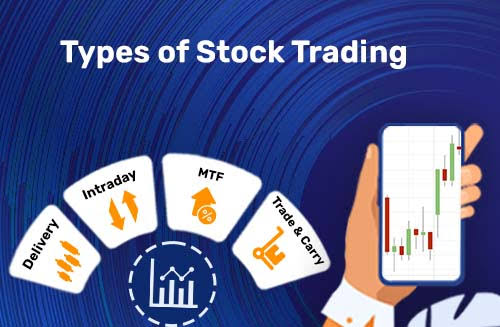
There are several types of stock trading strategies and approaches that investors and traders use in the stock market. These approaches can vary in terms of time horizon, risk tolerance, and the goals of the traders. Here are some common types of stock trading :-
* Day Trading :- Day traders buy and sell stocks within the same trading day, attempting to profit from short-term price movements. They usually make many trades in a single day and often use technical analysis and charts to identify entry and exit points.
* Swing Trading : Swing traders aim to capture short- to medium-term price swings in stocks. They may hold positions for several days or weeks, seeking to profit from trends and patterns in stock prices.
* Position Trading : Position traders have a longer time horizon and may hold positions for weeks, months, or even years. They base their decisions on fundamental analysis, looking at a company’s financial health and prospects for long-term growth.
* Value Investing : Value investors focus on finding undervalued stocks that are trading at a discount to their intrinsic value. They typically have a long-term perspective and are interested in the company’s fundamentals, including earnings, dividends, and balance sheets.
* Growth Investing : Growth investors look for stocks of companies with high growth potential. They are willing to pay a premium for stocks expected to experience rapid earnings growth. This approach often involves investing in technology and innovative companies.
* Dividend Investing : Dividend investors seek stocks of companies that pay regular dividends. They aim to generate income from these dividends and may hold the stocks for the long term. This approach is popular among income-oriented investors, such as retirees.
* Technical Analysis : Traders who use technical analysis analyze historical price charts and patterns to make trading decisions. They look for trends, support and resistance levels, and various technical indicators to predict future price movements.
* Fundamental Analysis : Fundamental analysts focus on a company’s financial statements, management quality, industry trends, and economic factors to assess the intrinsic value of a stock. They base their investment decisions on a stock’s underlying fundamentals.
* Options Trading : Options trading involves buying and selling options contracts, which give traders the right (but not the obligation) to buy or sell a stock at a specified price (strike price) within a certain time frame. Options can be used for various strategies, including hedging and leverage.
* Penny Stock Trading : Penny stocks are low-priced stocks typically trading at less than $5 per share. Some traders specialize in trading these stocks, but they can be highly speculative and carry significant risks.
* Algorithmic Trading : Algorithmic traders use computer algorithms to execute trading strategies automatically. These algorithms can analyze vast amounts of data and execute trades at high speeds, often in fractions of a second.
* Social Trading : Social trading platforms allow traders to follow and copy the trades of experienced investors. This approach is often used by beginners or those looking to leverage the expertise of others.
The choice of trading style or strategy depends on individual preferences, risk tolerance, and investment goals. It’s important for traders to thoroughly understand their chosen approach, perform due diligence, and manage risk appropriately. Additionally, stock trading involves inherent risks, and individuals should consider their financial situation and level of experience before engaging in any type of trading.
Thank-you
Written By :- TiME OF RAN
Mr Arvind Pandey
 TiME OF RAN